Many people think the cholera wahala ended when the rain started reducing. It has not.
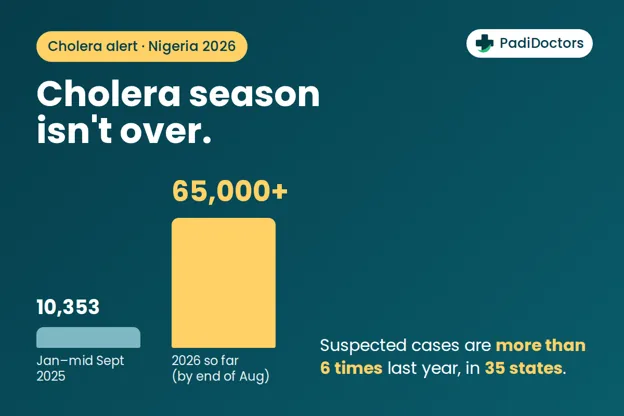
Nigeria has recorded more than 65,000 suspected cholera cases in 2026, across 35 states. Between January and mid-September 2025, the number was 10,353. This year is more than six times worse.
The NCDC warns that cholera often peaks between late August and October, when flood water gets into wells, boreholes and streams. Borno has been hit hardest, but cases have been reported in almost every state.
What is cholera?
Cholera is a germ that causes sudden, watery running stomach. You get it from water or food that has been dirtied with faeces (poo).
- It can start anytime from 12 hours to 5 days after the germ enters your body.
- Many people get only mild running stomach. Others lose so much water that they can die within hours without treatment.
- Even people who feel fine can carry the germ and spread it.
When running stomach becomes an emergency
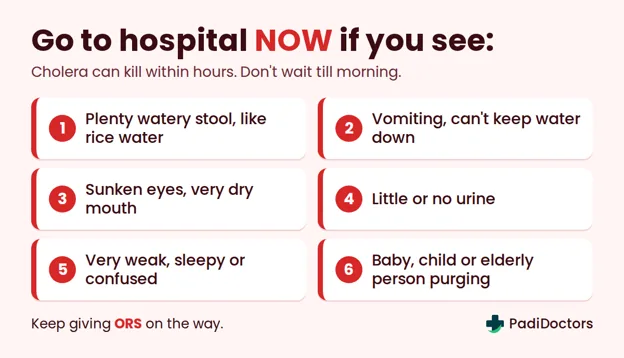
Most running stomach is not cholera. But if you see any of these signs, go straight to the nearest hospital or health centre. Don't wait till morning, and don't wait to see if it will stop.
- Plenty of watery stool that looks like rice water
- Vomiting, and the person can't keep water down
- Sunken eyes or a very dry mouth
- Little or no urine
- Very weak, sleepy or confused
Babies, children, pregnant women and older people get weak faster. If they are purging, take them early.
First aid at home: ORS
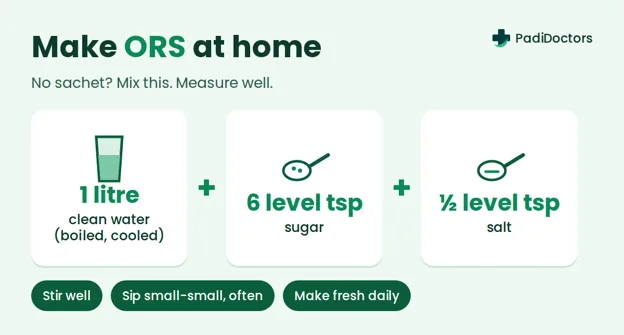
The biggest danger in cholera is losing too much water. ORS (oral rehydration solution) puts back the water and salt the body loses. Start it at the first sign of watery stool.
- Buy ORS sachets from any pharmacy or chemist and mix exactly as the pack says.
- No sachet? Mix 1 litre of clean water (boiled and cooled), 6 level teaspoons of sugar and half a level teaspoon of salt.
- Give small sips often, even if the person is vomiting. After vomiting, wait 10 minutes, then continue slowly.
- Keep breastfeeding babies.
- Make a fresh mix every day.
- Don't buy antibiotics or "stopping" drugs on your own. Let a health worker decide.
ORS is first aid, not a cure. If danger signs show up, keep giving ORS on the way to hospital.
Protect your family
- Drink only boiled, treated or sealed water. If you're not sure, boil it.
- Wash your hands with soap and water after using the toilet, before cooking and before eating.
- Eat food while it's hot and well cooked. Wash fruits with clean water.
- Use a toilet or latrine, and keep children away from flood water.
- Take the cholera vaccine if health workers bring it to your area.
How PadiDoctors can help

- Free symptom checker. Not sure if it's cholera or normal running stomach? Check your symptoms in English or Pidgin, any time.
- Talk to a licensed doctor, free for a limited time. A doctor can tell you if ORS at home is enough or if you need hospital now.
- Check in after treatment. Chat with a doctor if the running stomach comes back or you're worried about a family member.
PadiDoctors does not replace emergency care. If you see danger signs, go to hospital first.
Running stomach no be small thing. Share this post on your family WhatsApp group, and visit padidoctors.com.
References
- Cholera crisis engulfs Nigeria: over 65,000 suspected cases in 2026 – TheDiggerNews
- Cholera cases hit 65,000, diphtheria exceeds 10,000 in 2026 – NCDC, via Leadership
- NCDC warns Nigerians as cholera cases surpass 65,000 in 2026 – Premium Times
- Nigeria Humanitarian Situation Report (Cholera Response), July–August 2026 – UNICEF
- Cholera fact sheet – World Health Organization